
How Long Do Dental Implants Last? Realistic Lifespan, Care, and What Affects Longevity
If you’re weighing up a dental implant, one question almost always comes up early: how long will it actually last? It’s a fair thing to want clarity on, given the investment involved and the number of tooth-replacement options out there.
Implants have built a strong reputation for durability, but it’s worth understanding what that reputation is actually based on.
This article looks at what the evidence shows about implant lifespan, the difference between the implant and its crown, what typically causes implants to fail, and how a bit of ongoing care can make a real difference to how long yours lasts.
How Long Do Dental Implants Actually Last?
Dental implants have a strong long-term track record. A 25-year study following implant patients found survival rates of 98.8% at 10 years and 94.0% at 25 years, with success rates of 97.0% and 90.8% respectively. In plain terms: the large majority of implants placed are still functioning well a quarter of a century later.
That’s genuinely reassuring, but it’s also why “how long do teeth implants last” doesn’t have one single answer. Outcomes may still vary from person to person based on oral hygiene, general health, and how well the implant is cared for over time.
Are Dental Implants Permanent? Do They Last a Lifetime?
The titanium implant itself, which is the part fused into your jawbone, is designed to be a long-term, fixed solution, and many people do keep theirs for life. However, it’s more accurate to say dental implants can last a lifetime with good care, rather than that they’re guaranteed to.
The crown on top (the visible, tooth-shaped part) is a separate consideration.
The Implant vs the Crown: Two Different Lifespans
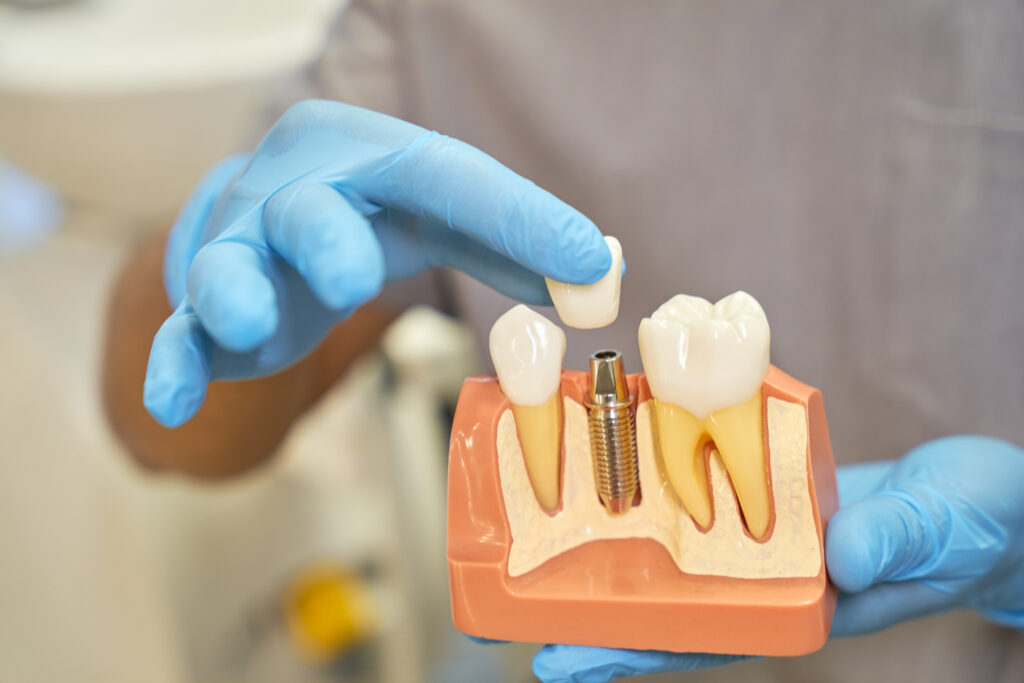
It helps to think of a dental implant as having two parts:
- The implant fixture – the titanium post anchored in the jawbone, intended as a long-term structure
- The crown – the visible tooth replacement attached on top
Crowns experience everyday wear from biting and chewing, so implant crown replacement is a normal part of long-term maintenance, typically needed after a decade or more, though this varies with individual wear patterns and habits like grinding.
What Causes Dental Implant Failure?
While implants have high long-term success rates, failure can still happen. Common contributing factors include:
- Peri-implantitis – inflammation and bone loss around the implant, often linked to plaque buildup (more about this later)
- Smoking – one of the most well-documented risk factors for implant complications
- Insufficient bone density – can affect how well the implant integrates initially
- Bruxism (teeth grinding) – places extra mechanical stress on the implant
- Poor oral hygiene – allows bacteria to build up around the implant site
- Underlying health conditions – some systemic conditions can affect healing and bone integration
Osseointegration: The Foundation of Success
Osseointegration is the process where the implant fuses with your jawbone, and it’s the foundation everything else depends on. In this research, it is shown that the first six months after placement are considered the most critical window, since this is when most implant failures tend to occur, coinciding with this healing and integration period.
Once osseointegration is successfully achieved, the implant’s long-term outlook improves considerably, which is part of why the early healing phase matters so much.
Peri-Implantitis: The Main Long-Term Risk
Peri-implantitis is essentially the implant equivalent of gum disease. It is the inflammation of the tissue around the implant that can progress to bone loss if left unmanaged. It’s the leading cause of implant complications well after the initial healing period.
Watching for early signs like redness, bleeding, or swelling around the implant and having it checked promptly gives the best chance of managing it before it affects the implant’s stability.
Smoking and Dental Implants
If you smoke, it’s worth knowing this is one of the more significant modifiable risk factors for implant longevity. Smoking has been shown to impair osseointegration by reducing blood flow and oxygenation to the healing site, increasing the risk of implant failure. A large meta-analysis also found that smoking nearly doubles the overall risk of implant failure compared to non-smokers.
The encouraging news is that this is a modifiable factor. Your dentist can talk you through options if quitting, even temporarily around your procedure, is something you’re considering.
How to Care for Dental Implants
A consistent maintenance routine goes a long way toward protecting your investment:
- Brush twice daily with a fluoride toothpaste, taking care around the implant
- Clean between the implant and neighbouring teeth with floss or interdental brushes
- Attend regular dental reviews so your dentist can monitor the implant site
- Avoid using your teeth to open packaging or bite unusually hard objects
- Mention any teeth grinding to your dentist, as a night guard may be recommended
What Affects Dental Implant Longevity Overall?
Bringing it together, the main factors influencing how long your implant lasts are:
- How consistently you maintain oral hygiene around the implant
- Whether you smoke or have quit
- The health of the surrounding gum and bone tissue
- Regular professional monitoring and cleaning
- Managing contributing habits like teeth grinding
The Cost of Getting Dental Implants
Given how long a well-maintained implant can last, many people weigh the upfront cost against decades of function. If you’re exploring what financial support might be available, our earlier post on government grants for dental implants in Australia covers this in more detail.
Investing in a Result That Lasts
Dental implants have one of the strongest long-term track records in modern dentistry, but their lifespan still depends heavily on the care they receive — both from your dentist and from your own daily habits. Good oral hygiene, regular reviews, and addressing risk factors like smoking all meaningfully improve the odds of your implant lasting for decades.
If you’re considering a dental implant or want to know more about what to expect, our team at Blue Gum Dental is here to help. Learn more about our dental implant procedure and healing process.
Get to know more about whether this treatment is for you by booking a consultation with our team from Brentwood, WA.
Frequently Asked Questions
Do dental implants last a lifetime?
The implant fixture itself is designed as a long-term solution and may last a lifetime with good care, though this isn’t guaranteed. The crown on top typically needs replacement after a decade or more due to normal wear.
What’s the most common cause of dental implant failure?
Peri-implantitis, or the inflammation and bone loss around the implant, is one of the leading long-term risks. Smoking, poor oral hygiene, and teeth grinding are also significant contributing factors.
Can smoking cause my dental implant to fail?
Smoking is one of the most well-documented risk factors for implant complications, as it impairs the healing process and increases the risk of failure. Speaking with your dentist about cessation support can help.
How often do dental implant crowns need to be replaced?
There’s no fixed timeline, but crowns often need replacement after a decade or more due to everyday wear. Your dentist can monitor this at regular check-ups.