
Veneers vs Composite Bonding: Which Is Right for You?
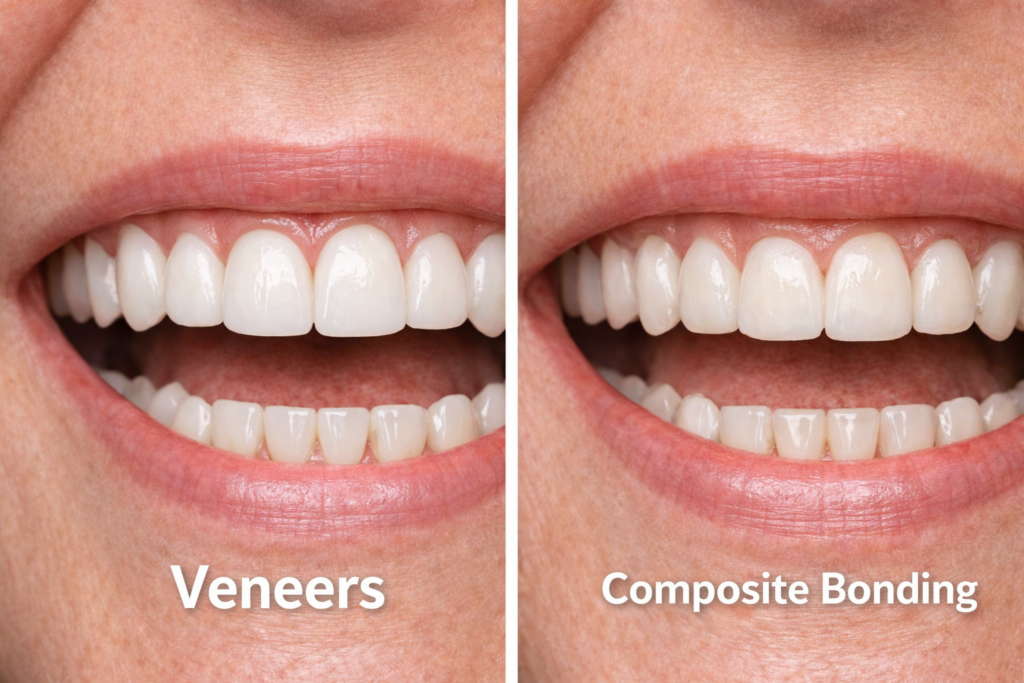
If you’ve been thinking about refreshing your smile, chances are you’ve come across two popular options: dental veneers and composite bonding. Both may offer a dramatic look for your teeth, but they work differently, cost differently, and suit different situations.
So how do you know which one is right for you?
Let’s break it down so you can walk into your consultation feeling informed and confident about your smile makeover options.
What Are Dental Veneers?
Dental veneers are thin shells, most commonly made from porcelain, that are bonded to the front surface of your teeth. They are custom-made to match the shape, size, and colour you are after, and because porcelain closely mimics the light-reflecting properties of natural teeth, the results look almost lifelike.
Veneers are a long-term cosmetic investment. To place them, a small amount of enamel is removed from the tooth surface so the veneer sits flush and natural-looking. This means the process is generally irreversible. So, once the enamel is removed, veneers (or another restoration) will always be needed on those teeth.
That said, porcelain veneers are highly durable, stain-resistant, and with proper care, can last 10 to 20 years. They’re a popular choice for patients looking for a comprehensive, lasting smile transformation.
What Is Composite Bonding?
Composite bonding, sometimes called dental bonding, involves applying a tooth-coloured resin directly onto the tooth surface. Your dentist sculpts and shapes the resin by hand, then hardens it with a special curing light. The result is a seamless, natural-looking improvement that can address many of the same concerns as veneers.
One of the biggest advantages of composite bonding for teeth is that it’s a minimally invasive procedure. In most cases, little to no enamel needs to be removed, making it a fully reversible option. It can often be completed in a single appointment, which makes it an appealing choice for patients who want visible results quickly and without extensive preparation.
The trade-off is longevity. Composite resin is more prone to staining and chipping over time compared to porcelain, and typically lasts five to seven years before it may need touching up or replacing.
Veneers vs Composite Bonding: Key Differences
Both are excellent cosmetic dental options, but they suit different needs. Here’s a quick comparison:
- Material: Porcelain veneers vs tooth-coloured composite resin
- Invasiveness: Veneers require enamel removal; bonding typically does not
- Reversibility: Bonding is reversible; veneers generally are not
- Longevity: Veneers last longer (10–20 years) vs bonding (5–7 years)
- Cost: Veneers tend to be more expensive given the materials and lab work involved
- Treatment time: Bonding can often be done in one visit; veneers require multiple appointments
- Stain resistance: Porcelain is highly stain-resistant; composite resin is more susceptible over time
Which Issues Can Each Treatment Fix?
Both veneers and composite bonding may be used to address a similar range of cosmetic concerns. These include chipped or cracked teeth, discolouration that does not respond to whitening, minor gaps between teeth, uneven or slightly misaligned teeth, and teeth that are misshapen or disproportionate in size.
For more significant alignment or bite concerns, neither veneers nor bonding are the right answer. Orthodontic treatment would be more appropriate to address them. You can either look at dental braces or clear aligners for alignment concerns.
So, Which Option Is Right for You?
The honest answer is: it depends on your goals, your budget, and the current condition of your teeth. Here’s a general guide:
Composite bonding may be the better fit if you:
- Want a quick, budget-friendly cosmetic improvement
- Have minor chips, small gaps, or slight discolouration
- Prefer a reversible option
- Are younger and may want flexibility to change your smile later
Dental veneers may be the better fit if you:
- Are looking for a longer-lasting, comprehensive smile transformation
- Have more significant discolouration, uneven teeth, or wear across multiple teeth
- Want a highly stain-resistant, durable result
- Are ready to commit to a permanent change
It’s also worth noting that the two options are not mutually exclusive. Some patients opt for veneers on the more visible upper teeth and bonding on less prominent teeth.
Your dentist will assess your teeth, discuss your goals, and recommend the approach that suits your situation best. Much like the decision between a dental crown or bridge, the right choice always comes down to your individual needs.
Know What’s Suitable for You
Choosing between veneers and composite bonding does not have to feel overwhelming. Whether you’re after a subtle refresh or a full smile transformation, there’s an option that fits your needs, your timeline, and your budget. Your dentist will help figure it out with you through a consultation.
For a dental veneer appointment in Brentwood, WA, our team at Blue Gum Dental is here to walk you through your options before any procedure is done. You will also be provided a customised plan that may work towards your goals,
Consult with our team for a more detailed discussion.
Frequently Asked Questions
Does composite bonding or veneers look more natural?
Both can look beautifully natural in the right hands. Porcelain veneers have a slight edge in mimicking the translucency of real teeth, but skilled composite bonding may also produce results that are virtually indistinguishable. The key is working with an experienced dentist who takes the time to match your natural tooth colour and shape.
Does getting veneers hurt?
The procedure itself is carried out under local anaesthesia, so you should not feel any discomfort during treatment. Some patients experience mild sensitivity in the days following veneer placement as the teeth adjust, but this typically settles quickly.
Can composite bonding be whitened if it stains?
Unfortunately, composite resin does not respond to whitening treatments the way natural enamel does. If your bonding has discoloured noticeably, your dentist may recommend polishing it or replacing it to restore the match with your surrounding teeth.
How do I care for veneers or bonding long-term?
Both options benefit from the same good habits: brushing twice daily, flossing regularly, avoiding biting into very hard foods, and attending routine dental check-ups. If you grind your teeth at night, a custom mouthguard is strongly recommended to protect your investment.