
Differences Between Snoring Mouthguards and Nightguards
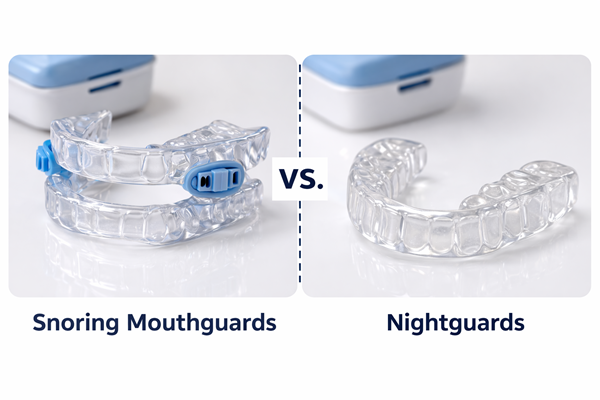
Many people wake up with a dry mouth, jaw discomfort, or complaints from a partner about loud snoring. Others may notice worn teeth or headaches caused by grinding during sleep. While these issues may seem unrelated, they can sometimes be addressed using specialised dental mouthguards.
Two common devices recommended by dentists are snoring mouthguards and nightguards. Although both are worn during sleep and fit over the teeth, they are designed for very different purposes.
So, how do these two differ? Understanding how they work can help you determine which option may be appropriate for your situation.
What Is a Snoring Mouthguard?
A snoring mouthguard, sometimes called a sleep mouthguard for snoring, is designed to help keep the airway open during sleep.
Snoring often occurs when the muscles in the throat relax, allowing soft tissues to partially block the airway. This obstruction can cause vibrations in the throat that produce the familiar snoring sound.
Snoring mouthguards work by gently repositioning the lower jaw slightly forward. This adjustment helps create more space in the airway, allowing air to flow more freely while you sleep.
How Snoring Mouthguards Work
Snoring mouthguards are commonly referred to as mandibular advancement devices (MADs). They function by:
- Moving the lower jaw forward
- Helping prevent the tongue from collapsing backward
- Keeping the airway more open during sleep
Many studies have proven that mandibular advancement devices have been shown to help reduce snoring and improve airflow in some individuals with sleep-related breathing issues.
These devices are often recommended for people who:
- Snore regularly
- Experience disrupted sleep due to breathing issues
- Have been advised to use an oral appliance for mild sleep-related breathing concerns
If you or your partner frequently notice loud snoring, it may be worth talking to your dentist about sleep mouthguards to determine whether a snoring device could help.
What Is a Nightguard?
A nightguard (sometimes called a dental nightguard) serves a different purpose. This is mostly designed to protect the teeth from damage caused by bruxism, the condition where people grind or clench their teeth during sleep.
Teeth grinding can occur unconsciously and may place significant pressure on the teeth and jaw. Over time, this pressure can wear down enamel, damage dental restorations, or cause jaw discomfort.
A nightguard acts as a protective barrier between the upper and lower teeth.
How Nightguards Protect Teeth
Nightguards help reduce the effects of grinding by:
- Creating a cushioned barrier between teeth
- Reducing pressure on the jaw joints
- Protecting enamel from wear and fractures
- Minimising stress on dental restorations
Teeth grinding (bruxism) can actually exert much force on your teeth, where it can reach up to 250 pounds of force. Untreated bruxism can eventually lead to tooth wear, tooth fractures, and jaw discomfort if not properly managed.
Because nightguards are designed to absorb and distribute the forces generated during grinding, they can play an important role in protecting long-term oral health.
Snoring Mouthguard vs Nightguard: Key Differences
Although both appliances are worn during sleep, their functions are very different.
Purpose
- Snoring mouthguards: May help reduce snoring by improving airflow.
- Nightguards: Protect teeth from grinding and clenching.
Jaw Position
- Snoring mouthguards: Reposition the jaw slightly forward.
- Nightguards: Keep the jaw in a neutral resting position.
Target Conditions
- Snoring mouthguards: Snoring or certain sleep-related breathing issues.
- Nightguards: Bruxism (teeth grinding or clenching).
Design
- Snoring mouthguards: Often adjustable to control jaw positioning.
- Nightguards: Designed primarily to cushion and protect teeth.
Because the devices serve different purposes, using the wrong one may not address the underlying issue. A consultation with your dentist will help you understand the issue at hand and give you a better understanding of which dental mouthguard you need.
Signs You May Need a Snoring Mouthguard
If you suspect that you have been snoring in your sleep, here are some signs that may indicate a snoring mouthguard could be helpful:
- Frequent loud snoring
- Interrupted sleep or waking feeling unrefreshed
- Dry mouth or sore throat in the morning
- A partner reporting pauses or breathing disturbances during sleep
- Daytime fatigue related to poor sleep quality
If these symptoms occur regularly, it may be helpful to speak with a dental professional about mouthguards for snoring and sleep apnoea.
However, persistent breathing issues during sleep should always be properly assessed, as treatment options vary depending on the cause.
Signs You May Need a Nightguard
On the other hand, signs of teeth grinding (bruxism) include:
- Worn or flattened teeth
- Jaw soreness or tightness in the morning
- Headaches upon waking
- Tooth sensitivity
- Chipped or cracked teeth
- Clicking or discomfort in the jaw joint
If you experience these symptoms, a nightguard dental appliance may help protect your teeth from further wear.
Custom Dental Mouthguards for Sleep
While over-the-counter mouthguards are available, custom dental mouthguards for sleep are often recommended because they are designed specifically to fit your teeth precisely.
Custom appliances created by a dentist typically offer:
- Better comfort
- More secure fit
- Improved durability
- Proper jaw positioning
- Reduced risk of irritation
A dental professional can also determine whether a snoring device or nightguard is more suitable for your needs.
Because jaw position plays an important role in sleep devices, an incorrect fit may reduce effectiveness or cause discomfort.
Talking to Your Dentist About Sleep Mouthguards
If you are unsure whether your symptoms relate to snoring or teeth grinding, discussing them with a dentist is an important first step.
During a consultation, your dentist may:
- Ask about sleep habits and symptoms
- Examine your teeth for signs of grinding
- Evaluate jaw function
- Discuss treatment options such as oral appliances
Depending on your needs, they may recommend a snoring mouthguard designed to improve airflow or a nightguard to protect your teeth.
Supporting Better Sleep and Oral Health
Snoring and teeth grinding can affect both sleep quality and oral health. While these issues may appear similar, they require different types of dental appliances.
A snoring mouthguard works by adjusting the jaw to help maintain an open airway, while a nightguard protects teeth from the pressure of grinding or clenching.
Understanding the difference between these devices can help you take the right steps toward improving your sleep and protecting your smile. If you have concerns about your snoring, our team at Blue Gum Dental is here to help you understand your concerns and options better.
Book an appointment today!
Frequently Asked Questions
What is the difference between a snoring mouthguard and a nightguard?
A snoring mouthguard is designed to help keep the airway open during sleep by gently repositioning the lower jaw forward. A nightguard, on the other hand, protects the teeth from grinding or clenching during sleep by creating a protective barrier between the upper and lower teeth.
How does a snoring mouthguard work?
A snoring mouthguard, also known as a mandibular advancement device, works by moving the lower jaw slightly forward. This position helps prevent the tongue and soft tissues from blocking the airway, which may help reduce snoring and improve airflow during sleep.
What is a nightguard used for?
A nightguard is used to protect the teeth from damage caused by teeth grinding or clenching during sleep, a condition known as bruxism. It acts as a cushion between the teeth and helps reduce pressure on the jaw joints.
How do I know if I need a snoring mouthguard?
You may benefit from a snoring mouthguard if you experience symptoms such as loud snoring, dry mouth in the morning, disrupted sleep, or daytime fatigue caused by poor sleep quality. A dentist can help determine if an oral appliance may be suitable for you.
What are the signs that you need a nightguard?
Common signs that you may need a nightguard include worn or flattened teeth, jaw soreness in the morning, frequent headaches, tooth sensitivity, chipped teeth, or jaw joint discomfort caused by teeth grinding.
Are custom dental mouthguards better than over-the-counter mouthguards?
Custom dental mouthguards are designed specifically to fit your teeth, which often improves comfort, stability, and effectiveness. A dentist can also ensure the appliance is correctly designed for your specific condition.
Should I talk to my dentist about sleep mouthguards?
Yes. If you experience symptoms such as snoring, teeth grinding, jaw pain, or disrupted sleep, your dentist can assess your oral health and recommend the most appropriate dental appliance for your needs.