
Dental Veneers vs. Crowns: Which One Should You Get?
A healthy, confident smile plays an important role in how you feel day to day. When a tooth is damaged, worn, discoloured or weakened, modern dentistry offers several ways to restore both appearance and function. Two of the most commonly discussed options are dental veneers and dental crowns.
While they may look similar once placed, veneers and crowns serve different purposes and suit different dental needs. Understanding the difference between a dental crown vs veneer can help you feel more confident when discussing treatment options with your dentist.
In this blog, we’ll explain how each option works, its benefits and limitations, and how dentists decide which is most appropriate for you.
What Are Dental Veneers?
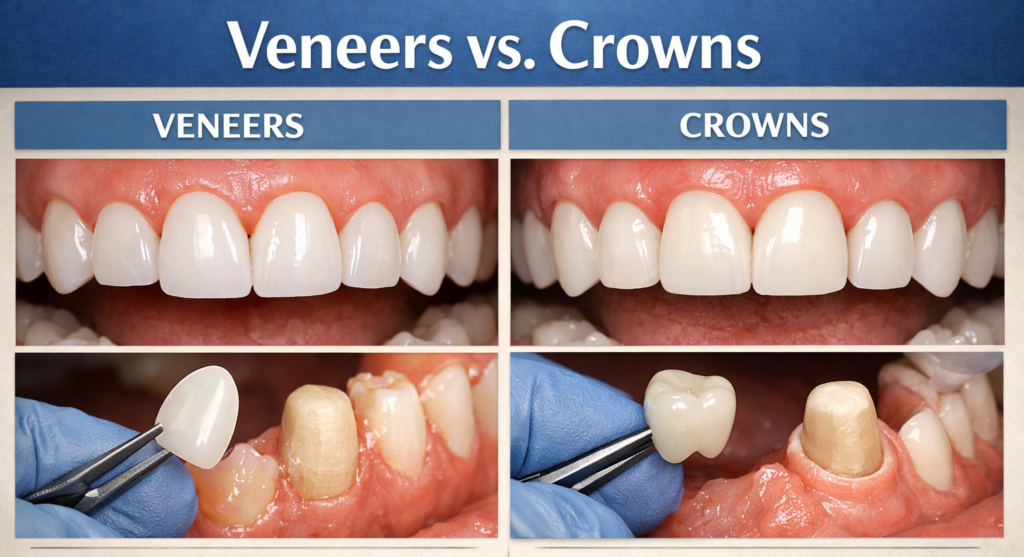
Dental veneers are thin shells, usually made from porcelain or composite resin, that are bonded to the front surface of a tooth. Their primary purpose is to improve the appearance of teeth rather than restore significant strength.
Veneers are commonly used to address:
- Discolouration that doesn’t respond well to whitening
- Minor chips or cracks
- Uneven, worn or slightly misaligned teeth
- Gaps between teeth
Because veneers cover only the front surface, they are considered a more conservative option. In many cases, only a small amount of enamel needs to be reshaped before placement.
In a research, porcelain veneers were shown to provide long-term aesthetic improvement when used appropriately and bonded to healthy tooth structure.
What Are Dental Crowns?
Dental crowns cover the entire tooth, like a protective cap. They are designed not only to improve appearance but also to restore strength, shape and function to a damaged or weakened tooth.
Dental crowns are often recommended when a tooth:
- Has extensive decay
- Is cracked or structurally compromised
- Has undergone root canal treatment
- Has a large existing filling that weakens the tooth
- Is severely worn down
Crowns can be made from porcelain, ceramic, metal alloys, or a combination of materials, depending on the location of the tooth and functional requirements.
Dental Crown vs Veneer: Key Differences
While both treatments aim to improve your smile, there are important differences between a dental crown vs veneer.
Coverage
- Veneers: Cover only the front surface of the tooth
- Crowns: Cover the entire tooth above the gumline
Purpose
- Veneers: Primarily cosmetic
- Crowns: Both functional and cosmetic
Tooth Preparation
- Veneers: Minimal enamel removal
- Crowns: More tooth structure reshaped to allow full coverage
Strength
- Veneers: Improve appearance but add limited strength
- Crowns: Significantly reinforce the tooth
Longevity
Both options can last many years with good care, with longevity ultimately depending on oral hygiene, bite forces and material choice.
Benefits and Limitations of Dental Veneers
Benefits
- Natural-looking results
- Less invasive than crowns
- Preserves more natural tooth structure
- Effective for cosmetic concerns
Limitations
- Not suitable for heavily damaged or weakened teeth
- Do not protect the entire tooth
- Can chip if exposed to heavy biting forces
- Not reversible once enamel is removed
Veneers work best when the underlying tooth is healthy and strong.
Benefits and Limitations of Dental Crowns
Benefits
- Protect and strengthen damaged teeth
- Restore chewing function
- Suitable after root canal treatment
- Durable and long-lasting
Limitations
- More tooth preparation required
- Higher cost compared to veneers
- May take multiple appointments
Although crowns involve more preparation, they are often the safer choice when a tooth’s structure is compromised. However, it’s still best to have your oral health assessed by a qualified dentist to explore your options.
How Dentists Decide Which Option Is Right for You
Choosing between dental veneers and dental crowns is not about which option is “better,” but which is more appropriate for your individual situation.
Your dentist will consider:
- The amount of remaining healthy tooth structure
- Whether the tooth has existing cracks, decay or large fillings
- Bite alignment and grinding habits
- Your aesthetic goals
- Long-term oral health stability
This is why a thorough dental examination, including X-rays when needed, is essential before recommending either option.
What to Expect During Treatment
Although the steps vary slightly, both treatments follow a similar process:
- Assessment and Planning – Your dentist examines the tooth and discusses suitable options
- Tooth Preparation – The tooth is reshaped to allow space for the veneer or crown
- Impressions – Accurate moulds are taken for custom fabrication
- Temporary Restoration – A temporary veneer or crown may be placed
- Final Placement – The custom restoration is bonded and adjusted for comfort
The procedure is typically performed under local anaesthetic and is well tolerated by most patients.
Caring for Veneers and Crowns
Both veneers and crowns rely on healthy gums and good oral hygiene for long-term success. To help maintain them:
- Brush twice daily with fluoride toothpaste
- Clean between teeth with floss or interdental brushes
- Avoid biting hard objects such as ice
- Wear a night guard if you grind your teeth
- Attend regular dental check-ups
Making an Informed Choice
Understanding the difference between a dental crown vs veneer allows you to make informed decisions about your dental care. Veneers may be suitable for cosmetic improvements on healthy teeth, while crowns are often necessary when strength and protection are priorities.
If you’re considering dental veneers or dental crowns, our team at Blue Gum Dental is here to provide clear, personalised guidance in a calm and supportive environment.
Schedule a consultation today and know more about your options today.
Frequently Asked Questions
1. What is the main difference between dental veneers and dental crowns?
Dental veneers cover only the front surface of a tooth and are mainly used to improve appearance. Dental crowns cover the entire tooth and are designed to restore strength, structure and function as well as appearance.
2. Are dental veneers or crowns better for damaged teeth?
This depends on the extent of damage. Veneers are generally suitable for cosmetic concerns on otherwise healthy teeth. Dental crowns are more appropriate when a tooth is weakened by decay, cracks, large fillings or root canal treatment, as they provide full coverage and protection.
3. How long do dental veneers and dental crowns last?
Both veneers and crowns can last many years with proper care. Longevity depends on factors such as oral hygiene, bite forces, grinding habits and regular dental check-ups. Your dentist will monitor them during routine visits.
4. Is the procedure painful?
Both veneer and crown procedures are typically performed under local anaesthetic, making them comfortable for most patients. Some mild sensitivity may occur afterward, but this usually settles within a short period.
5. Can veneers or crowns be placed on any tooth?
Not always. The suitability of veneers or crowns depends on the condition of the tooth, gum health and bite alignment. A thorough dental examination is necessary to determine the most appropriate option.
6. Do veneers or crowns require special care?
They do not require special products, but good oral hygiene is essential. Brushing twice daily with fluoride toothpaste, cleaning between teeth, avoiding hard objects and attending regular dental check-ups help maintain both veneers and crowns.
7. How do I know whether I need a dental crown vs veneer?
The choice between a dental crown vs veneer is based on your individual oral health needs and goals. Your dentist will assess the tooth’s structure, strength and appearance before recommending the most suitable treatment.